
Freelancer & Small Business Finance in 2026: The Complete Money Management Guide for Modern Entrepreneurs
Introduction
You are putting in 60-hour workweeks, chasing down enterprise clients, and delivering top-tier services, but your bank account balances tell a completely different story.
You are constantly dealing with manual billing templates, tracking down late client invoices across multiple email threads, and guessing your true net profit margins.
When tax season approaches, you are hit with immense stress because your personal and business transactions are completely tangled together.
Here is the brutal truth: Most independent consultants and small businesses do not fail because they lack marketable skills.
They fail because they struggle with structured money management systems. Running a modern enterprise—whether you are a solo consultant, a digital content creator, or a growing team—requires moving away from chaotic spreadsheets and unorganized workflows.
The baseline difference between an unstable side hustle and a highly scalable company relies entirely on building a reliable financial framework.
Implementing proper automation allows you to stop losing hours to back-office administrative work and turn your financial tracking into a true growth engine.
This comprehensive guide provides an actionable roadmap for mastering freelancer & small business finance, helping you save time, optimize tax filings, and gain absolute control over your cash flow.
Table of Contents (TOC)
The 4 Core Financial Pillars of Scalable Business Architecture
Core Accounting & Invoicing Systems
Global Payments & Strategic Cash Flow Management
Automated Expense Capture & Corporate Card Control
Tax Planning, Compliance, & Payroll Optimization
Data Intelligence: Financial Reporting & BI for Small Teams
Workflow Automation: Connecting Your Finance Stack
Case Study: Transforming a Chaotic Freelance Billing Pipeline
The 2026 Small Business Tool Comparison Matrix
Conclusion & Your 30-Day Financial Action Plan
1. The 4 Core Financial Pillars of Scalable Business Architecture {#core-pillars}
To transform an irregular independent portfolio into a highly disciplined, legally sound corporate structure, you must anchor your business operations across four essential pillars:
⚠️ The Core Structural Failures to Avoid
Pillar 1: Absolute Income Separation: Business capital and personal living expenses must occupy entirely distinct accounts. Mixing these funds makes it incredibly difficult to calculate accurate profitability and leaves you highly vulnerable during formal tax audits.
Pillar 2: Continuous Expense Categorization: If your business cannot log, tag, and verify an expense in under five minutes, you are losing substantial net profits to hidden software subscriptions and missing out on valuable tax write-offs.
Pillar 3: Proactive Tax Provisioning: Automatically route 25–35% of every inbound invoice into a dedicated compliance reserve before funding daily operations or business development. Paying historic tax liabilities using next month’s projected revenue is a major cause of sudden cash crunches.
Pillar 4: The Profit-First Execution Model: Treat your personal income as a fixed business overhead cost. Allocate your standard salary draw first, fulfill your compliance obligations next, and use the remaining balance to fund business growth.
internal links

our other posts are given below

our other posts are given below
2. Core Accounting & Invoicing Systems {#accounting-invoicing}
Your core accounting ledger serves as the central database for your entire business. Using unorganized manual invoice templates leads to calculation errors and delayed client payments. Modern software automates transaction logging by linking directly to your business bank feeds.
                  [Business Bank Feeds]
                            │
                            ▼
+-------------------------------------------------------+
|             CENTRAL CLOUD ACCOUNTING CORE             |
|   (Automated Ledger Engine & Transaction Matching)    |
+-------------------------------------------------------+
        │                   │                   │
        ▼                   ▼                   ▼
   [Invoicing]         [Reporting]       [Tax Matching]
QuickBooks Online
QuickBooks Online remains a primary industry standard for small-to-medium enterprises and growing agencies. It offers a robust infrastructure for automated transaction categorization, double-entry compliance tracking, and extensive third-party platform integrations.
Best For: Small business teams and agencies managing multi-layered corporate accounts.
Estimated Cost: $30 – $200 per month (depending on feature tier).
Xero
Xero is a highly adaptable cloud engine favored by growing technology firms, consultants, and cross-border teams. Its open API architecture allows you to connect thousands of niche applications effortlessly without facing unexpected user access caps.
Best For: Scaling businesses requiring smooth multi-currency reconciliations and flexible tool integration.
Estimated Cost: $15 – $80 per month.
FreshBooks
FreshBooks focuses heavily on service-based freelancers and creative agencies. It features built-in project time-tracking mechanisms that convert billable hours directly into professional client invoices with a single click.
Best For: Independent consultants, writers, designers, and billable-hour professionals.
Estimated Cost: $20 – $60 per month.
Wave Accounting
Wave provides an accessible, entry-level option for solo entrepreneurs on tight budgets. It provides dependable bookkeeping and basic invoicing functions completely free of cost, monetizing its platform through integrated payment processing add-ons.
Best For: Solopreneurs and early-stage micro-ventures seeking to eliminate fixed software overhead.
Estimated Cost: Free Core Ledger (standard transaction fees apply for integrated card payments).
3. Global Payments & Strategic Cash Flow Management {#payments-cash-flow}
Collecting your revenue efficiently requires setting up clean payment processors that minimize transaction friction for global enterprise clients.
+------------------------------------------------------------------------+
|                     HIGH-EFFICIENCY TRANSACTION FLOW                   |
+------------------+     +--------------------+     +--------------------+
|  Client Settles  | --> | Automated Clearing | --> | High-Yield Business|
| Inbound Invoice  |     |  Gateway Platform  |     |   Reserve Account  |
+------------------+     +--------------------+     +--------------------+
Stripe
Stripe stands as a premier digital infrastructure for online businesses, subscription models, and recurring client retainers. It delivers high-performing payment processing via clean checkout screens, secure credit card portals, and developer-friendly API endpoints.
Processing Cost: Approximately 2.9% + $0.30 per standard domestic card transaction.
Payoneer
Payoneer provides vital cross-border financial infrastructure for freelancers and independent contractors operating outside primary banking corridors. It provides reliable global receiving accounts that make international client wires straightforward and cost-efficient.
Processing Cost: Transaction fees vary by payment corridor and transfer methods.
Square
Square provides an excellent unified setup for businesses running hybrid operations that blend in-person services, events, or product sales with standard digital invoicing.
Processing Cost: Approximately 2.6% + $0.10 per card-present transaction.
Best Practices for Healthy Cash Flow
Automate Payment Reminders: Configure your systems to automatically send polite payment notices to clients 3 days before, on the exact due date of, and 7 days past an invoice deadline.
Maintain an Operational Cash Buffer: Build and isolate a rolling 30-to-60 day cash runway inside a liquid business savings account to cover your tools and core overhead during slower cycles.
Enforce Stricter Payment Terms: Shift your standard invoicing from outdated Net-30 timelines to highly responsive Net-7 or Net-15 terms to keep your cash flowing smoothly.
our other posts are given below

our other posts are given below
4. Automated Expense Capture & Corporate Card Control {#expense-management}
Manually holding onto paper receipts and sorting through old statements is an inefficient way to track business deductions. Modern expense tracking uses automated matching software to log expenses the moment a transaction occurs.
Expensify
Expensify eliminates manual entry by using smart OCR scanning technology to capture paper receipts via your mobile device. It extracts key details like the vendor name, date, and tax totals, and matches them straight to your open corporate credit card logs.
Estimated Cost: $5 – $9 per user, monthly.
Brex & Ramp
Brex and Ramp represent a major shift in modern spend management for fast-growing businesses. These platforms provide smart corporate cards packed with built-in spending limits, automated receipt matching, and instant virtual card generation for software subscriptions.
Estimated Cost: Card-linked business models (often offering feature-rich free tiers backed by standard interchange fees).
5. Tax Planning, Compliance, & Payroll Optimization {#tax-compliance}
TurboTax & H&R Block
For solo operators, independent contractors, and single-owner LLCs, platforms like TurboTax and H&R Block provide straightforward, guided filing flows for preparing annual tax returns and filing Schedule C documentation.
Estimated Cost: $0 – $200 (depending on structural business complexity and state filing requirements).
QuickBooks Self-Employed + TurboTax Bundle
This integrated bundle automatically tracks your business mileage and logs business deductions through a simple mobile app. When tax season arrives, it exports your organized data directly into TurboTax to save you hours of manual prep work.
Gusto
When your business scales from a single operator to a small team, managing payroll compliance manually becomes a major liability. Gusto automates your team’s payroll runs, calculates regional contractor withholdings, and handles your state and federal payroll tax filings automatically.
Estimated Cost: Base software subscription fee plus a predictable per-employee monthly cost.

our other posts are given below

our other posts are given below
6. Data Intelligence: Financial Reporting & BI for Small Teams {#reporting-bi}
Raw transaction ledgers only tell part of your financial story. To make informed, strategic decisions, you need to turn those data points into actionable visual insights.
Google Sheets & Looker Studio
For micro-SMEs and solopreneurs looking to build a data engine without adding new software costs, syncing a well-structured Google Sheet directly to a free Looker Studio dashboard creates clear, automated business charts.
Core Advantage: Completely cost-effective and highly customizable for early-stage tracking.
Microsoft Power BI
As your business revenue grows, moving up to Power BI unlocks advanced financial analysis. It hooks straight into your cloud ledgers to generate real-time metrics, drill-down revenue overviews, and deep project profitability analysis.
Estimated Cost: Power BI Pro runs approximately $10 per user, monthly.
Key Business Reports to Track Weekly
Real-Time Cash Position: Your total available cash across all operating, savings, and multi-currency collection accounts.
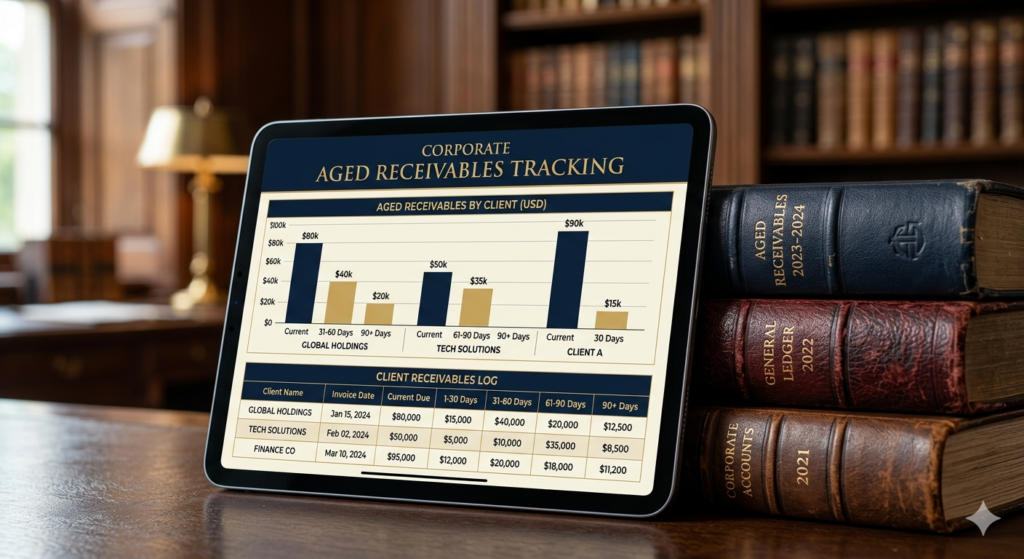
Aged Receivables Ledger: A clear breakdown of all unpaid invoices grouped by time outstanding (0-30, 31-60, and 61-90+ days).
True Project Profitability: Your gross revenue minus the direct software tools, contractor hours, and overhead costs dedicated to that specific account.
7. Workflow Automation: Connecting Your Finance Stack {#workflow-automation}
Automation ensures your tools communicate seamlessly behind the scenes, cutting down on administrative manual touchpoints. Tools like Zapier, Make, and n8n act as the glue connecting your finance software together.
[Signed Client Contract] ──> [Auto-Generate Invoice] ──> [Trigger Bank Feed Sync] ──> [Slack Update]
High-Efficiency Automation Pipelines
The Billing Automation Pipeline: When a client signs a service agreement via an application like DocuSign, an automation immediately triggers your ledger (like Xero or FreshBooks) to generate and email the corresponding invoice.
The Payment Reconciliation Sync: The moment a client clears an invoice via Stripe, an automated step matches the payment to your ledger, updates your database, and sends a quick confirmation to your team’s Slack channel.

our other posts are given below
8. Case Study: Transforming a Chaotic Freelance Billing Pipeline {#case-study}
The Problem: Administrative Friction
Consider Alex, an independent technology consultant managing a demanding portfolio of international enterprise clients. Alex was generating substantial revenues but losing over 6 hours every single week to administrative manual tasks. Invoices were scattered across random email threads, client payments were frequently arriving late, and Alex had no central view of the company’s true monthly cash flow.
The Solution: An Automated Overhaul
Alex updated the business infrastructure by deploying a highly automated, connected software framework:
Ledger Clean-Up: Implemented FreshBooks to handle unified project time-tracking and client invoicing.
Payment Processing: Connected Stripe straight to the invoice portals to accept direct card payments and electronic transfers.
Spend Tracking: Deployed an automated expense card to log recurring software tool subscriptions instantly.
Clear Visual Insights: Connected the core ledger data directly to a Looker Studio dashboard to monitor key business metrics.
The Tangible Operational Transformation
| Key Business Metric | Legacy Manual Setup | Automated Modern Framework |
| Days Sales Outstanding (DSO) | 45 Days | 18 Days |
| Weekly Administrative Overhead | 6 Hours | Under 1 Hour |
| Cash Flow Visibility | Blurry / Delayed | Instant Real-Time Cash Balance |
| Effective Hourly Valuation | Base Rate | 12% Increase (via reduced admin time) |
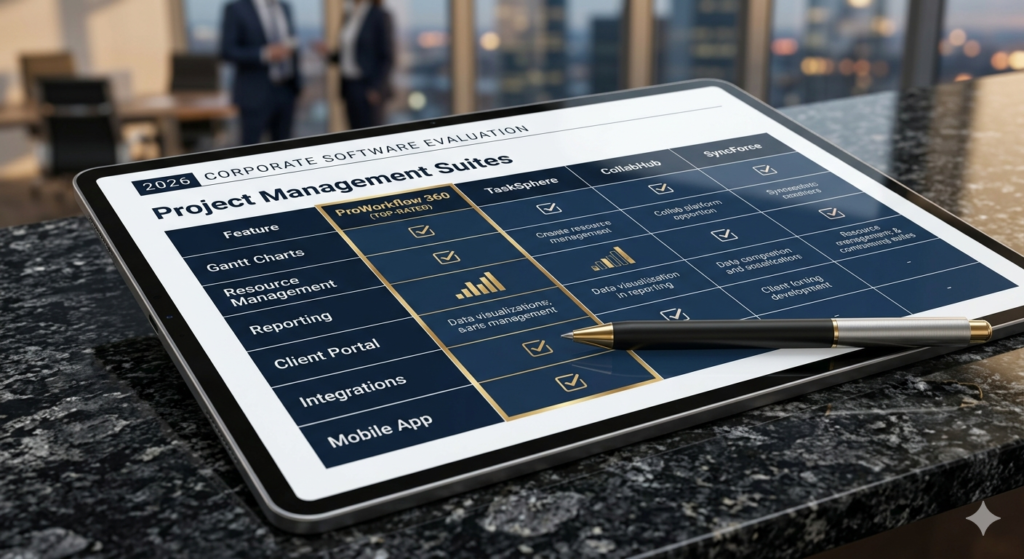
9. The 2026 Small Business Tool Comparison Matrix {#tool-matrix}
To choose the perfect combination of software tools for your business scale, evaluate your needs using this direct breakdown:
| System Category | Accessible Entry Point | Premium Enterprise Standard | Core Strategic Advantage |
| Accounting Ledgers | Wave Accounting (Free Core) | QuickBooks Online / Xero | Automatic bank feed categorizations and structured invoice tracking. |
| Payment Processors | Payoneer / Square | Stripe Developer Suites | Secures multi-currency transactions and lowers payment friction for clients. |
| Expense Capture | Google Sheet Logs | Expensify / Ramp / Brex | Instantly scans paper receipts and matches charges to virtual cards. |
| Compliance & Payroll | TurboTax Self-Employed | Gusto Advanced Platforms | Automates contractor distributions and handles state and federal tax filings. |
| Data Intelligence | Looker Studio Dashboards | Microsoft Power BI Pro | Delivers interactive visual reporting on true project profit margins. |

our other posts are given below
FAQ
1. How do I effectively transition from a mixed personal-business setup to a structured 3-account system?
The transition requires a clean break rather than a gradual shift. Stop running personal expenses through your primary business channel immediately. Open a dedicated business checking account and a separate tax reserve account.
Begin routing 100% of incoming client invoices into the main business operating account. From there, set up an automated transfer to push 30% into your tax reserve fund instantly. Finally, establish a fixed, predictable date each month to pay yourself a standard personal salary draw into your personal checking account. Treat this personal transfer as a rigid business overhead cost that remains flat even during high-revenue months.
3. What is the safest way to project weekly cash flow when my client income is highly variable?
When your income fluctuates, avoid making long-term projections based on fixed monthly averages. Instead, use a rolling multi-scenario allocation model and track your numbers weekly.
Every Friday afternoon, log your absolute cash position across all accounts, list your confirmed inbound invoices for the next 14 days, and subtract your fixed software bills, contractor pay, and personal salary draws. Base your operational spending on a conservative, low-revenue baseline. By keeping your personal salary fixed during peak months, you naturally build up a 6-month capital runway in your business reserves to cover your expenses during slower cycles without facing financial panic.
2. Can I use free accounting tools indefinitely, or will I eventually outgrow them?
Free platforms like Wave Accounting are excellent, cost-effective entry points for solo freelancers, contractors, and early-stage micro-ventures trying to eliminate fixed software overhead. You can comfortably use a free tier indefinitely if your business model remains streamlined—such as managing a handful of recurring retainer clients with low transaction volumes and simple expense tracking.
However, you will likely need to upgrade to a premium standard like Xero or QuickBooks Online when your business hits specific growth milestones:
Managing inventory.
Hiring a team that requires complex payroll compliance.
Needing deep multi-currency reconciliations for global corporate accounts.
Requiring advanced API integrations to connect with custom client portals or automation pipelines.
Conclusion
The Bottom Line
Mastering freelancer & small business finance is all about automating transaction logging, setting up clean account separation, and gaining weekly visibility over your cash. You do not need overly complicated enterprise software—you just need a lean, well-integrated tech stack that saves you time and protects your profit margins.
Your 30-Day Execution Blueprint
[ ] Week 1: Centralize Your Ledger Core — Pick one primary accounting software (Xero, QuickBooks, or Wave) and migrate your historical business data from the past year.
[ ] Week 2: Enforce Rigid Invoice Terms — Move all outbound client invoices to strict Net-7 or Net-15 terms, and turn on automated late-payment reminders.
[ ] Week 3: Connect Automated Collection Channels — Link your payment processors (Stripe or Payoneer) directly to your ledger to automate payment reconciliation.
[ ] Week 4: Launch a Friday Cash Check-In — Set a recurring calendar reminder every Friday afternoon to review your cash balances, upcoming expenses, and aged receivables.
What is the single biggest money management issue slowing down your business today?
Leave a comment below detailing your current invoicing, tax prep, or cash flow setup, and we will help you map out a clean, automated integration strategy to fix it.